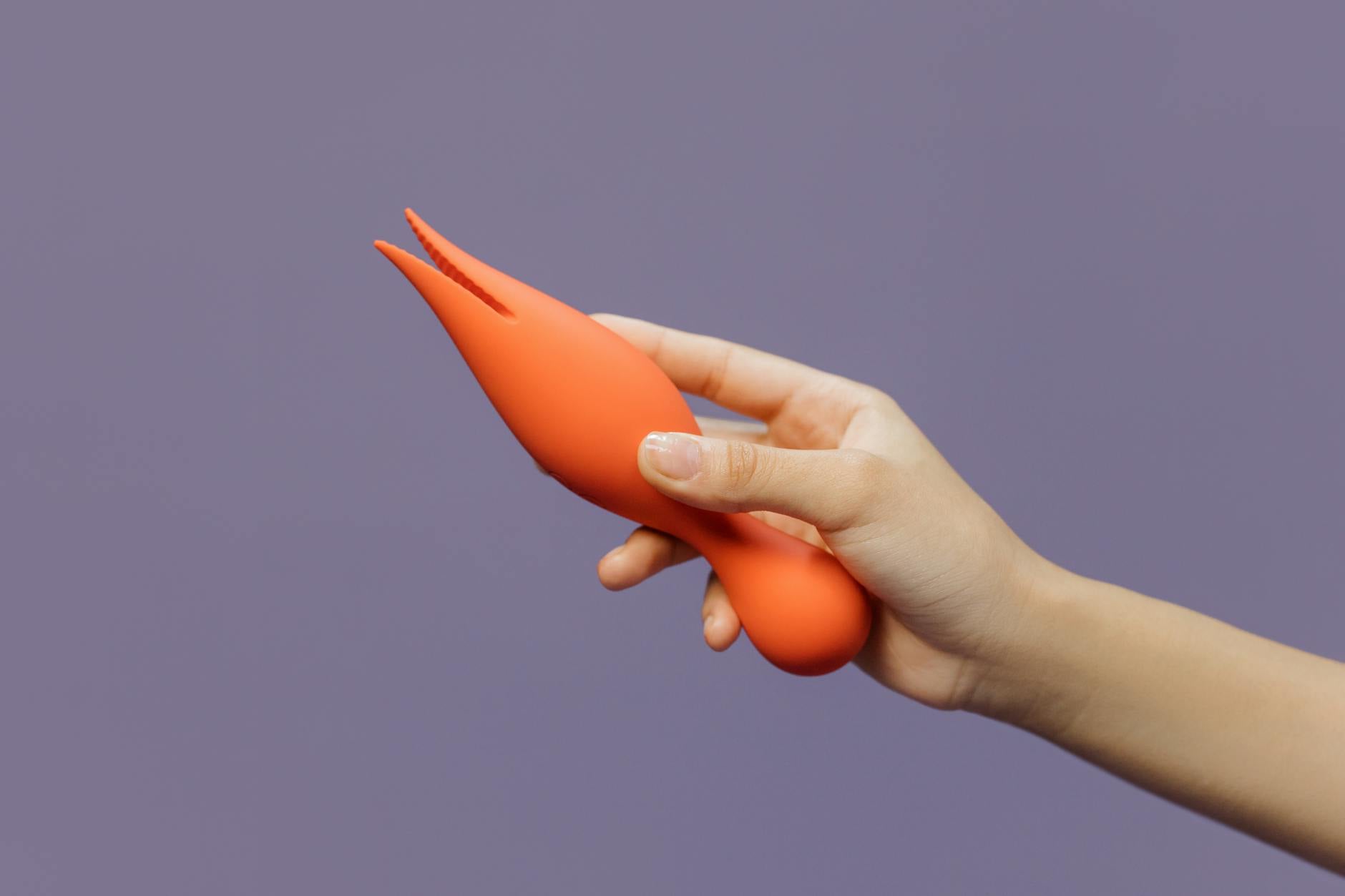
Here's the thing about early relationship anxiety
You've met someone great. Everything checks the boxes. But somewhere between the second date and deciding you're exclusive, your body went offline. Your mind is spinning with questions (What if they don't actually like me? What if I mess this up? Am I enough?), and by the time you're alone together, desire has evaporated completely. This is not a you problem. This is an anxiety-hijacking-your-nervous-system problem.
When your brain is in threat mode, your body can't access pleasure. That's not personal failure. That's neurobiology. And the good news is that lemon vibrators, particularly high-quality clitoral sucking toys, can help you rewire this pattern by rebuilding your relationship with your own pleasure first.
Why early relationship anxiety tanks arousal
New relationships activate the anxiety parts of your brain for good reason. You're vulnerable. You're hoping for something to work. There's perceived risk. Your nervous system is literally designed to tighten and contract when it senses danger, and early romance can feel like high-stakes danger to an anxious attachment style or someone with past relationship trauma.
When cortisol and adrenaline spike, three things happen at once:
Your pelvic floor contracts. Tightness blocks sensation. Your ability to focus inward dissolves because you're scanning your partner's face for rejection cues. Arousal, which requires a relaxed parasympathetic state, becomes impossible.
Most people respond to this by trying harder to perform arousal around their partner, which only increases anxiety. The solution is the opposite. You need to rebuild confidence in your own capacity for pleasure, solo, before you bring a partner back into the picture.
How solo pleasure work rewires your nervous system
When you use a lemon vibrator alone, without pressure to perform for anyone, you're teaching your nervous system that pleasure is safe. There's no judgment. No comparison. No stakes except your own satisfaction.
Lemon vibrators, especially air-suction designs, work beautifully for anxious bodies because they create a sensation that doesn't require you to be in a particular mental state. You don't have to perform arousal. The stimulation is consistent and reliable. Over repeated sessions, your nervous system starts to relax. Your pelvic floor unclenches. Sensation returns.
This is not self-care fluff. This is nervous system recalibration.
The three-phase approach
Phase 1: Pleasure without pressure (weeks 1-2).
Set aside 20 minutes. Phone on silent. No expectation of orgasm. Turn on a lemon clitoral vibrator at a low setting and explore what feels good without rushing. This teaches your body that you deserve pleasure even when nothing else is perfect. When anxiety creeps in (and it will), notice it without judgment. "There's that thought." Then return to sensation.
Phase 2: Reconnecting with your baseline (weeks 3-4).
Now you can layer in elements that feel grounding. Some people light a candle. Some put on music. Some practice breathing (four counts in, six counts out helps activate your parasympathetic nervous system). Use your lemon vibrator at whatever intensity feels good. The goal is to build a neural pathway between a calmer internal state and arousal.
Phase 3: Building confidence before partnered sex (weeks 5+).
Once you've rebuilt trust in your own pleasure, you can start thinking about what you want from partnered intimacy. This is where you decide: Do I want to bring a toy into partnered sex? Do I want to wait until I feel more secure? Do I want to talk to my partner about what helps me relax? All of these are solid choices, but now you're choosing from a place of confidence, not anxiety.
Picking the right lemon vibrator for anxiety-driven tension
When your pelvic floor is chronically tight, direct vibration can feel intense or uncomfortable. That's why I tend to recommend air-suction lemon clitoral vibrators over traditional bullet vibrators for anxious bodies. The sensation is gentler and more diffuse. It stimulates without requiring that you be in a high state of arousal already.
Start at the lowest setting. Seriously. There's zero benefit to jumping to intensity 5 if you're still in sympathetic nervous system overdrive. Low intensity for longer sessions trains your body that pleasure can be calm and steady.
What to do when anxiety shows up mid-session
You're using your lemon vibrator and suddenly a spiral hits: "What if my partner loses interest? What if I'm not good enough at this? What am I even doing?" This is normal. Anxiety doesn't disappear on schedule.
Here's what helps. First, don't pause and shame yourself. Just pause. Take three breaths. Notice where anxiety lives in your body (throat tightness, chest heaviness, stomach clench). Then decide: Do I want to continue, or do I want to stop? Either choice is fine. You're learning that your pleasure is negotiable and yours to control.
Over time, the anxiety interruptions get shorter and less intense. Your nervous system learns that this is a safe container.
When to bring this up with your partner
You don't owe anyone access to your anxiety work. This is yours to do. But if your partner is sensitive and wondering why intimacy keeps stalling, honesty helps. You don't need to say "I'm doing solo work with a lemon vibrator." You can say "I've been anxious about how this relationship is going, and it's blocking my arousal. I'm working on it, and I want you to know it's not about you. It's about me rebuilding confidence."
Good partners respond to honesty. They get it. And once you've rebuilt your own pleasure foundation, you might find that partnered sex feels safer because you trust your body again. Sometimes sharing that you use a clitoral vibrator becomes part of the conversation naturally. Sometimes it doesn't. Your timeline, your choice.
The bridge moment
There will be a moment, maybe after three weeks or three months, when you realize you've been thinking about pleasure without immediately spiraling into doubt. When you use your lemon vibrator and your mind stays present instead of rehearsing rejection scenarios. When your pelvic floor stays relaxed through an entire session.
That moment matters. That's your nervous system saying it's ready. You haven't erased anxiety. But you've decoupled it from desire. And that changes everything.
If you're working through deeper relationship trauma or attachment patterns, talking to a therapist who specializes in how to use a lemon vibrator when you can't relax during sex can help accelerate the process. But the solo work with a lemon sexual toy is the foundation. It teaches your body that pleasure is yours to claim, regardless of what's happening in the relationship.
Frequently Asked Questions
Can using a lemon vibrator alone actually help with relationship anxiety?
Yes. When you practice pleasure in a low-pressure environment, your nervous system recalibrates. You're building evidence that arousal is possible, that your body works, that you deserve satisfaction. This foundation makes partnered intimacy feel less fraught because you're not relying on a partner to "fix" your arousal. You've already proven to yourself that it exists.
How often should I use a lemon clitoral vibrator during this phase?
Three to four times a week is ideal. Enough to create new neural pathways, but not so much that it feels like a chore. If daily practice feels good, go for it. The goal is consistency and pleasure, not performance metrics.
What if I orgasm during solo practice but can't orgasm with my partner?
That's extremely common and completely normal. Your brain feels safer alone. You know you won't be judged. There's no performance pressure. Once you've proven to yourself that your body can orgasm, you can start thinking about what conditions help that happen with a partner. Sometimes it's using a toy together. Sometimes it's longer foreplay. Sometimes it's a conversation about what you need.
Is it weird to use a lemon vibrator if I'm in a new relationship?
Not at all. People use vibrators for lots of reasons: solo pleasure, partnered pleasure, anxiety recovery, sensation exploration, and sometimes just because it feels good. Using a clitoral vibrator while working through relationship anxiety is actually a really healthy, proactive choice. You're taking responsibility for your own arousal instead of waiting for a partner to fix it.
Should I tell my partner I'm using a lemon vibrator to work through anxiety?
That's your call. You don't have an obligation to share your solo pleasure practices. But if your partner notices a shift in your relaxation or arousal, they might ask. If you want to tell them, something like "I've been working on relaxing my nervous system because relationship anxiety was blocking my arousal, and it's helping" is honest without oversharing. If you prefer privacy, that's also valid.
How long until I feel like myself sexually again?
That depends on the depth of your anxiety and whether you have past relationship trauma. Most people see a shift in 3-4 weeks of consistent practice. Real, durable recalibration usually takes 8-12 weeks. The timeline isn't linear. Some days will feel harder than others. That's normal. Keep showing up, and your nervous system will follow.
A note on deeper patterns
If your relationship anxiety is rooted in past trauma, attachment avoidance, or chronic anxiety disorder, a lemon vibrator is a helpful tool, not a substitute for therapy. Solo pleasure work can absolutely support healing, but working with a relationship specialist who understands nervous system dysregulation will speed up the process. You deserve both tools.
Your desire matters. Your pleasure matters. And so does rebuilding confidence in your own body. A good lemon vibrator becomes part of that journey, one consistent, judgment-free session at a time.