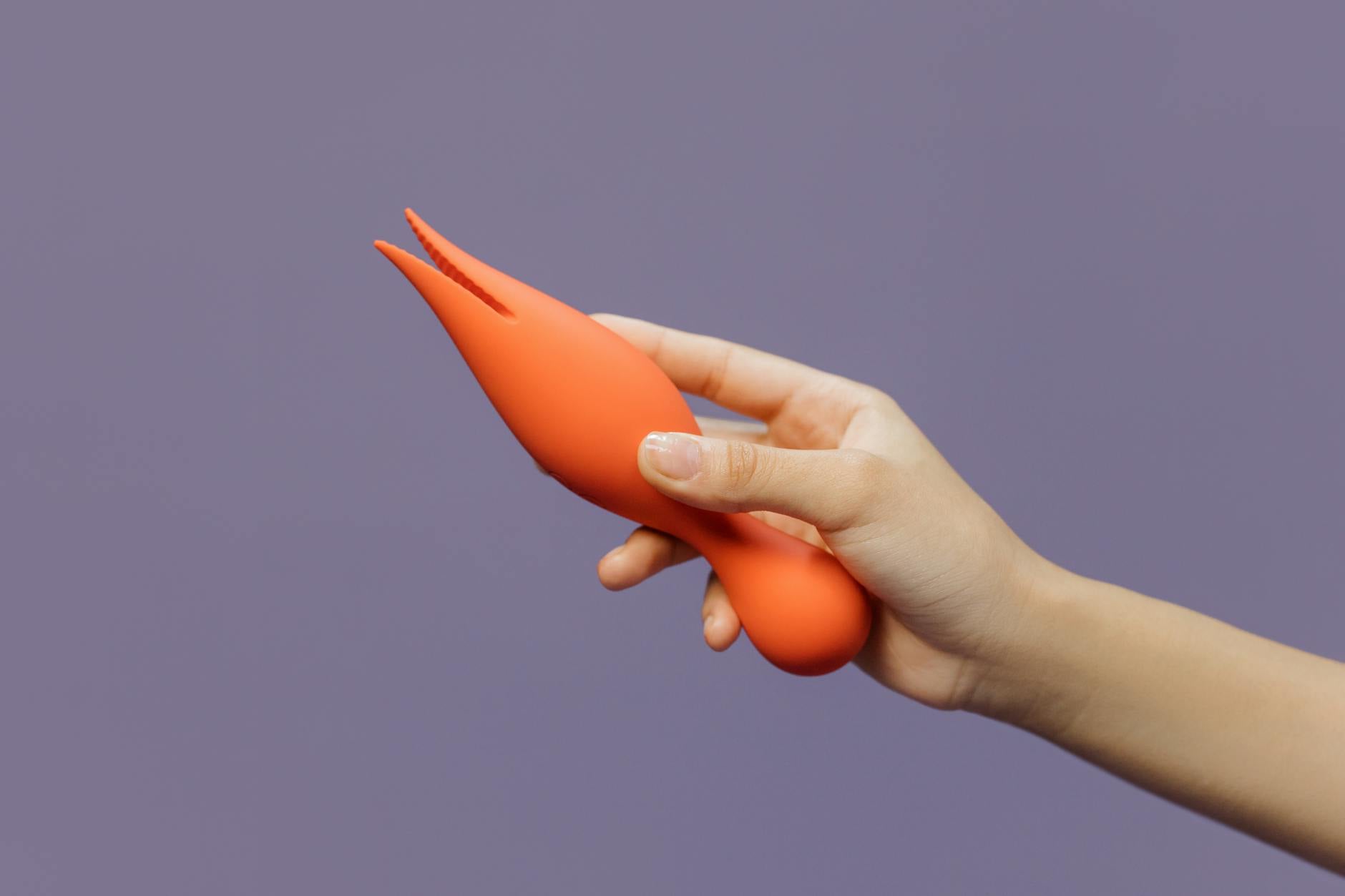
When there's nobody else in the room, you get to stop performing. No checking whether they're okay, no wondering if this is taking too long, no editing yourself for someone else's comfort. That freedom changes everything.
Solo time with a lemon vibrator isn't a substitute for partnered sex, and it's not something you need to apologize for. It's actually the foundation for better partnered sex, because you learn what your body likes when you're not distracted by someone else's response. That knowledge matters.
When you're by yourself, the entire experience compresses into sensation and what you actually want. There's no social bandwidth being spent on communication or reassurance. A tool like a lemon vibrator capitalizes on that focus. The suction mechanism doesn't require the same kind of coordination or angle adjustment that you might navigate with a partner present. You can experiment freely.
Unlike bullet vibrators or wand vibrators that rely purely on vibration intensity, a lemon sucker works through gentle suction rhythms. This matters solo because you can explore those patterns without worrying about whether someone else finds it visually awkward or whether you're taking up their time. You're completely in control of pacing and intensity.
Let's be real: you don't need rose petals or a whole production. But a few practical things help.
First, time. Pick a moment when you actually have 20 to 40 minutes and won't be interrupted. Not rushed. Not squeezing it in between tasks. This matters because arousal takes time to build, especially if you've been stressed or distracted. Your nervous system needs permission to shift gears.
Second, space. A bedroom is obvious, but anywhere you feel genuinely private works. The physical location matters less than the psychological sense that you're not going to be walked in on.
Third, your phone. Put it in another room or actually silent it. Not just face-down. The visual reminder that someone could text you keeps a small part of your brain in social mode. That small part is enough to pull you out of sensation.
Begin with your lemon vibrator on a low setting, ideally pattern 1 or 2 if your device has multiple modes. You might think you want to go straight to intensity, but lower settings let you explore sensation without overwhelming your nervous system. This is especially true if you've been numb, stressed, or disconnected from your body lately.
Water-based lubricant is non-negotiable, even if you produce natural lubrication. The toy itself moving against your skin benefits from it. Use enough that you're not hearing suction sounds that feel uncomfortable. The goal is sensation, not efficiency.
Take time exploring different pressures and patterns before settling into a rhythm. Your body will tell you when you've found something that works. Often that's not the highest intensity. Often it's a specific pattern at medium strength with consistent pressure. Pay attention to that information.
This is where a lot of solo time falls apart. Your brain stays in planning mode instead of dropping into sensation. You're thinking about whether you're doing it right, whether this should feel better, whether something's broken if you're not close yet.
Instead, narrate what you're physically sensing without judgment. That subtle shift in pressure, the way a particular pattern makes your thighs tense, whether you want to slow down or speed up. Stay in your body, not in commentary about your body.
Fantasy, porn, or neither. All are fine. Some people need mental material to focus. Others find it distracting. What matters is what actually helps you stay present. There's no wrong answer here.
You learn what your actual pleasure baseline is. Not what you think you should like. Not what looked hot in something you watched. What your body, alone and unstaged, responds to. For a lot of people, especially people who've spent years in partnered situations where they're unconsciously calibrating around someone else's needs, that discovery is genuinely shocking.
Maybe you like slower building and longer sessions. Maybe you like fast intensity and quick peaks. Maybe you prefer side-to-side motion over direct stimulation. Maybe a specific pattern on your lemon vibrator creates an orgasm that feels completely different from anything you've experienced before. Solo time reveals all of this.
That information doesn't stay private if you move into partnered sex later. A partner who knows "I actually like 15 minutes of building and medium intensity" versus someone guessing is completely different. You're not asking them to read your mind. You already read it yourself.
If you've been numb, disconnected, or haven't touched yourself in months or years, starting alone is strategic. A partner watching creates pressure. Solo practice lets you rebuild sensation without that weight.
Start with lower intensities and longer timeframes. Give your nervous system time to remember what pleasure feels like. Orgasm might not happen the first few times, and that's completely normal. You're rewiring a neural pathway, not flipping a switch.
Consistency helps more than intensity here. A 15-minute solo session three times a week rebuilds sensation faster than a single hour-long attempt. Your body registers the pattern and starts anticipating pleasure again.
Solo sessions with a lemon vibrator sometimes don't end in orgasm, and that doesn't mean something's wrong. Sometimes the point is sensation without a finish. Sometimes your body's still waking up. Sometimes you're in a phase of your cycle where arousal just feels different.
If you're frustrated about not reaching orgasm, that frustration is actually the thing blocking it. Your sympathetic nervous system kicks in, which is the opposite of what you need. Better to stop, enjoy what you felt, and try again another day.
Orgasm-free solo sessions still count. You're still learning your body. You're still giving yourself pleasure. You're still breaking the pattern of only touching yourself when it's "productive."
Solo pleasure with a clitoral vibrator is radical not because the device is special. It's radical because it's time you're spending on yourself without justification or productivity metrics. You're not doing it to improve your partnered sex. You're not doing it because a therapist told you to. You're doing it because your pleasure matters as its own thing.
That's the shift. The lemon sucker is just the tool. The actual change is deciding that you deserve uninterrupted, judgment-free time exploring what feels good to your body. That decision, more than any device, is what opens things up.
There's no required frequency. Some people find twice a week works best for them. Others prefer once a month or more often. What matters is that the rhythm feels sustainable and something you actually want, not something you think you should do. If you're trying to rebuild sensation after numbness or disconnection, consistency three times a week tends to work better than sporadic sessions, but honor your actual desire.
That guilt is cultural conditioning, not truth. Your nervous system doesn't care whether someone else is present. Solo pleasure is how you learn your own body, which directly improves every sexual experience you'll ever have. If guilt shows up, name it and keep going anyway. After a few sessions, your nervous system usually learns that solo time is safe.
Completely yes. Solo pleasure and partnered sex are different experiences that both matter. Many people find that solo sessions help them stay connected to their own body, especially in long-term relationships where it's easy to fall into autopilot. Your partner doesn't need to be present for every single moment of your sexual life for the relationship to be solid.
Start on the lowest setting with plenty of lubrication and give yourself permission to go slowly. If suction feels weird or intense, dial back the intensity and focus on gentler patterns. Your first session isn't the time to explore everything. It's the time to get comfortable with the basic sensation. It might take three or four sessions before your body relaxes into it. That's completely normal.
Not every session ends in orgasm, and that doesn't mean something's broken. If you're consistently unable to orgasm after 20+ sessions and you want to be able to, that's worth discussing with a healthcare provider, especially if orgasm was easier before. But occasional sessions without climax are fine. Some of the best solo time doesn't have that as the goal.
Not at all. Without a partner present, you can take as long as your body needs. 30 minutes, 45 minutes, even an hour of exploration is completely reasonable. Your body doesn't have a timer. Solo time is actually where many people discover they like slower, longer sessions than they realized because they're not managing someone else's patience.
When you've spent real time alone with your body and a lemon vibrator, learning exactly what you respond to, something shifts. You stop second-guessing your own pleasure. You stop performing. You know what you like, and that knowledge is powerful whether you're alone or with someone else.
Start with the next quiet evening you have. Pick your favorite setting. Take your time. And pay attention to what your body actually wants. That information is going to matter.