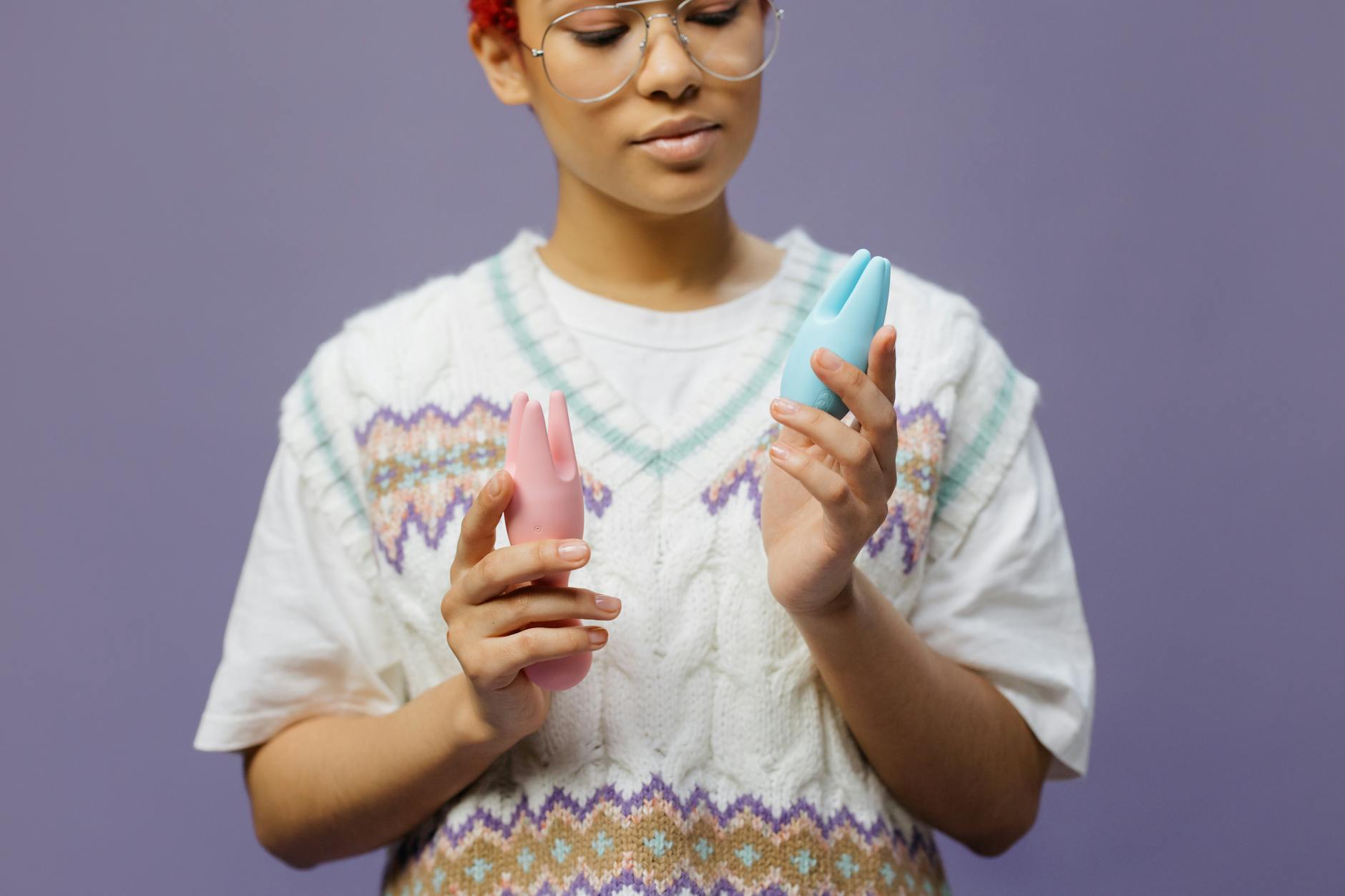
How to Use a Lemon Vibrator When Desire Feels Mismatched With Your Partner
When one of you wants sex more often than the other, the real issue isn't frequency. It's reconnection. Here's how a clitoral vibrator can help you both feel wanted again.
When one person wants sex significantly more often than the other, couples therapy gets called in. But here's what I've learned after years of working with couples through this exact friction. The mismatch isn't actually about frequency. It's about feeling wanted. And that's a completely different problem to solve.
One partner asking for more sex isn't really asking for more sex. They're asking, "Do you still want me?" The other partner saying no isn't saying no to sex. They're saying no to pressure, or exhaustion, or disconnection that feels impossible to fix. Neither person is wrong. But they're having two different conversations in the same bed.
The reason I'm bringing this up in the context of lemon vibrators is simple. A clitoral vibrator can short-circuit the shame spiral that usually happens here. Instead of "you want it and I don't," you can shift to "we both want you to feel good," which is true and also fundamentally different.
When your partner doesn't want sex as often as you do, your brain interprets it as rejection of you. Not logically. Emotionally. At the nervous system level. Your threat detection system activates. You start tracking their lack of interest like it's evidence. Meanwhile, the lower-desire partner feels pressured, which tanks their interest further. Classic pursuit-withdraw cycle.
Here's what's actually happening neurologically. The higher-desire partner's brain is seeking connection and reassurance through sex. The lower-desire partner's brain is already overwhelmed, and sex feels like one more thing being demanded. Neither brain is malfunctioning. They're just running different operating systems.
The breakthrough usually comes when both people stop framing this as a problem to solve through frequency negotiation. "Twice a week instead of three times" doesn't fix the real issue, which is that one person feels rejected and the other feels hunted. That resentment silences the actual conversation you need to have.
Here's what I see happen when couples introduce a clitoral vibrator into this specific friction point.
First, it removes the scoreboard. If the higher-desire partner is getting pleasure from a lemon vibrator, the lower-desire partner doesn't have to perform. There's no pressure to get in the mood on someone else's timeline. That absence of pressure does something crucial. It lowers the cortisol baseline.
Second, it invites participation without demand. The lower-desire partner can be present and involved in the pleasure of their partner without the performance anxiety of their own arousal. This is important. Presence without pressure is how desire actually rebuilds.
Third, it separates pleasure from obligation. Using a clitoral vibrator together isn't the same as having sex. It's its own thing. Intimate, yes. Sexy, absolutely. But structurally different. That difference gives your nervous system permission to relax into it instead of bracing against it.
Don't lead with the vibrator. Lead with the dynamic.
Honestly, the conversation usually needs to happen outside the bedroom. Pick a calm moment. Say something like: "I know we've been struggling with wanting sex at different frequencies. I don't think that's really about how many times. I think I've been feeling rejected, and you've been feeling pressured. And I want to fix that."
Then. Then you can introduce the idea. Not as a solution to the frequency problem. As a way to stay connected without the pressure either of you has been feeling.
If they seem open, you might say something like: "What if we tried using a clitoral vibrator together sometimes? Just exploring what that feels like without any expectation attached. No pressure on either of us to get in the mood or perform."
Many lower-desire partners are actually relieved by this. They get to see their partner experience pleasure without feeling like they're failing at being enough. And many higher-desire partners feel genuinely wanted because their pleasure matters enough to explore.
Start by making it collaborative. Not about one person using the vibrator while the other watches. That dynamic often reinforces the feeling of separation.
Instead, sit together. One person uses the clitoral vibrator. The other person's hands are on the other person's body. Chest, thighs, stomach. Your partner isn't performing pleasure. They're offering presence and touch. This shifts the whole energy from performance to connection.
The lower-desire partner might also use the lemon vibrator. This can be surprisingly activating for both people because you're both in the same experience rather than one person trying to bridge a gap alone.
Start at lower intensities. Patterns 1 through 3 on most clitoral vibrators create a slow, building kind of stimulation that invites you to stay present rather than chase an orgasm. That presence is exactly what reconnects couples when desire feels polarized.
Don't make it about coming. Make it about feeling. That distinction matters. An orgasm-focused approach can reactivate performance pressure for the lower-desire partner. A sensation-focused approach keeps nervous systems regulated.
Using a lemon vibrator together addresses the surface problem. The deeper work is usually about why the lower-desire partner's interest dropped in the first place.
Was there a life transition nobody talked about? Stress, grief, a medication change, hormonal shifts. Sometimes desire drops because something real changed biologically or emotionally. Other times it's relational. Maybe the higher-desire partner's emotional needs aren't being met and they're trying to fill that gap with sex.
The vibrator is permission to have the conversation. "I want us to be close again" is easier to say when you're not arguing about frequency. "What would make you feel more interested?" is a real question you can ask when you're not in pursuit-withdraw mode.
Most couples don't realize that desire often comes back naturally once the pressure comes off. Not always. Sometimes there's a legitimate biological piece that needs a provider's attention. But often, people's interest in sex with their partner rebounds significantly once their nervous system stops bracing for another request.
If you've tried this approach and nothing shifts, that's useful information. It means the mismatch is pointing at something bigger.
Maybe one partner is dealing with depression or anxiety. Maybe the relationship has resentment that needs real repair, not just a vibrator. Maybe one person is struggling with their sexuality or identity. These are all real situations that respond better to actual therapy than to any technique.
But I've also seen couples reconnect significantly just by removing the pressure and introducing touch that isn't about sexual performance. A lemon vibrator is one tool for that. The real medicine is usually the conversation you have while using it.
One thing I tell couples with mismatched desire is to let go of the timeline. Desire doesn't come back on a schedule. It comes back when your nervous system feels safe again.
Using a clitoral vibrator together might reignite things quickly for some couples. For others it's a slow rewiring. Both are fine. The point isn't to force frequency back to some ideal number. The point is to remember that you both want to feel wanted, and that's achievable without the scorekeeping.
If you're the higher-desire partner, sometimes the kindest thing you can do is give your partner permission to not be interested for a while. Really mean it. Your nervous system will calm down faster when you stop tracking their lack of interest as evidence of rejection.
If you're the lower-desire partner, sometimes what your person needs is to know you still find them attractive. Using a clitoral vibrator together, present and touching them, often communicates that more clearly than saying it.
Not on its own. But it can remove the pressure that's usually making the mismatch worse. When pressure drops, nervous systems settle. When nervous systems settle, desire sometimes returns naturally. The vibrator is permission, not a solution. The solution is usually the conversations that happen alongside it.
Start way slower. You don't have to use it together right away. One partner might explore alone first. The other partner might simply know it exists and feel less pressure to be the sole source of their partner's pleasure. Sometimes just having the conversation that you're not trying to pressure them shifts the dynamic enough to matter.
No. If you and your partner explicitly agreed to no sexual activity, that's different. But if you're in a relationship where desire is mismatched, you haven't agreed to no pleasure. You've fallen into a pattern where one person feels rejected and the other feels hunted. Using a vibrator together can actually be part of rebuilding intimacy.
There's no "should." Some couples find using it once a week or every two weeks keeps them feeling connected. Others use it sporadically when they feel the disconnection creeping back in. The higher-desire partner shouldn't use it as a way to create an expectation. It works best as something you explore together when you're both curious about it, not when it's an obligation.
That's fine. Sometimes one partner really loves using a clitoral vibrator and the other is more about the closeness of being near each other while it's happening. That's not failure. That's just how your bodies work. The goal isn't synchronized pleasure. The goal is to feel connected again.
It can absolutely help you talk about the real issues. When you remove pressure, you remove defensiveness. A lot of couples can't have productive conversations about their desire mismatch because one person is too hurt and the other is too resentful. Using a clitoral vibrator together often creates enough safety for the real conversation to happen afterward. You're not using it to avoid talking. You're using it to create conditions where talking is actually possible.
At the root, when desire is mismatched, both people are usually feeling unseen. One person is saying, "I need you to want me." The other is saying, "I need you to stop demanding." Neither is wrong. But you can't solve one without acknowledging the other.
A lemon vibrator isn't magic. But it can be the thing that helps you both stop fighting and start remembering that you actually like each other. That's when desire usually comes back. Not because you're having more sex. Because you're feeling wanted again without feeling hunted.