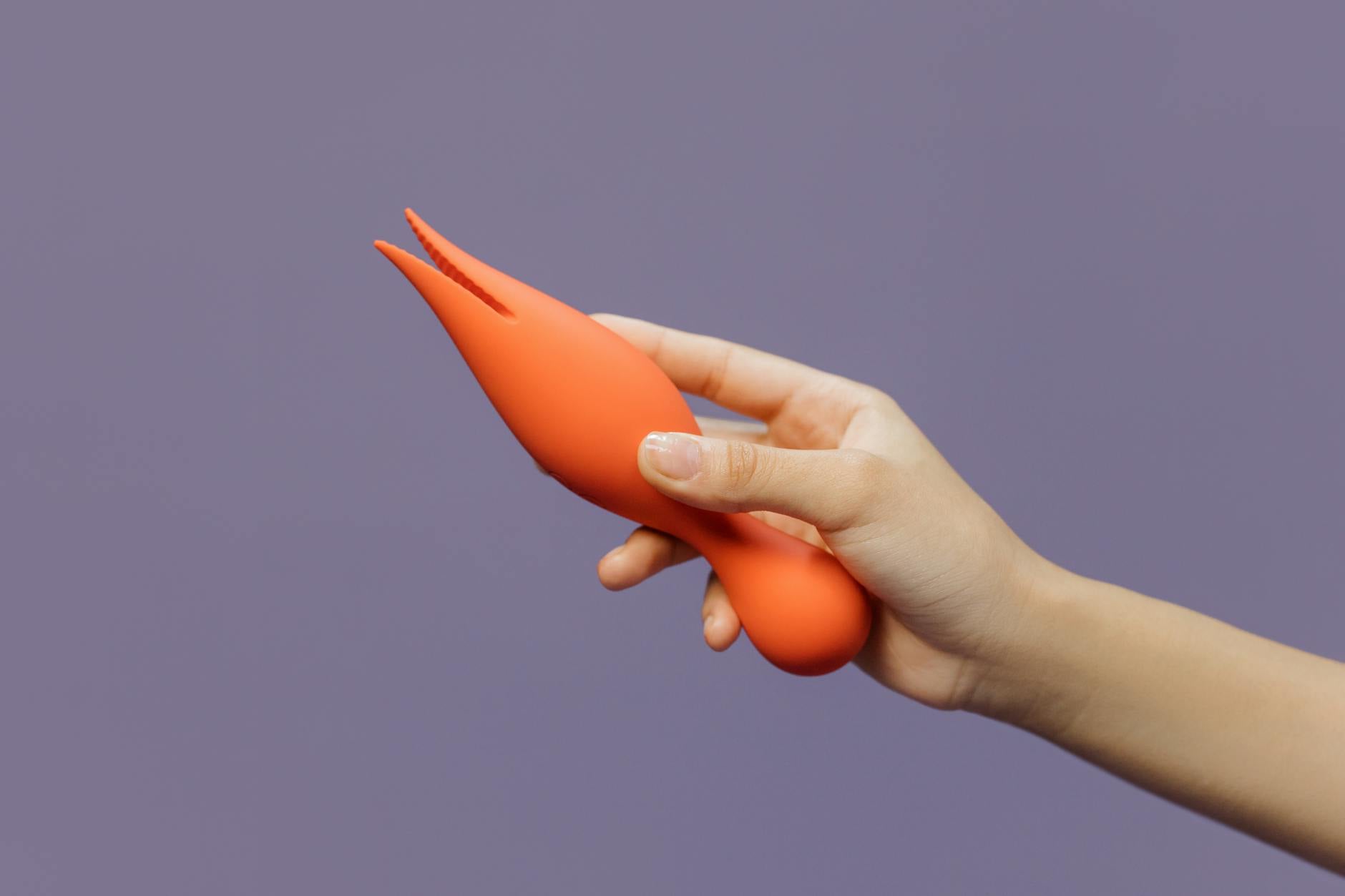
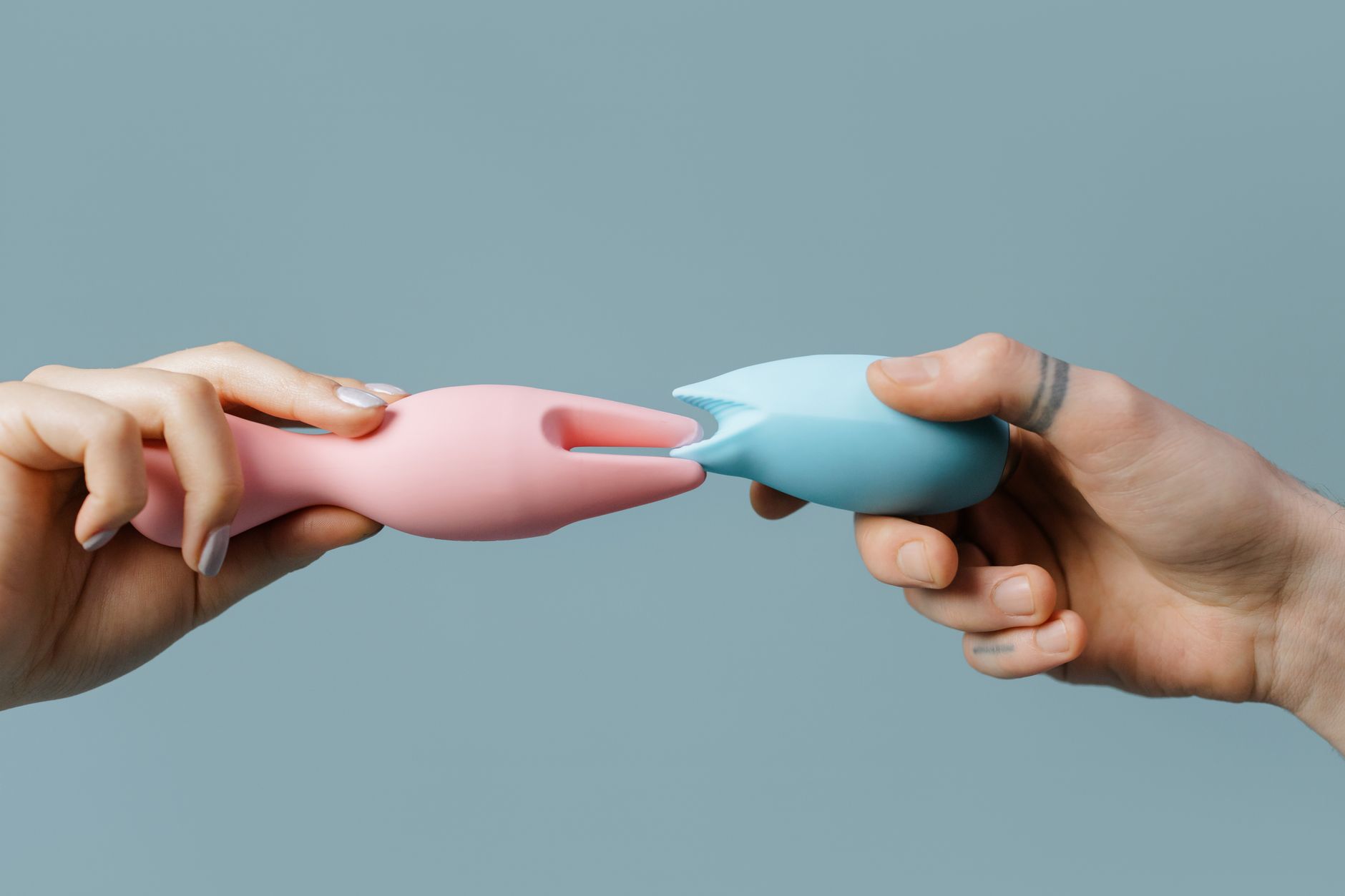
How to Use a Lemon Vibrator When Your Partner Isn't Interested in Toys
Your partner's hesitation doesn't have to mean your pleasure goes on pause. Here's how to navigate resistance, build comfort, and enjoy a lemon clitoral vibrator solo or together.
Your partner thinks toys mean they're not enough. They're not alone in that fear, and they're also not right, but the belief is real and it's blocking things. That gap between what's actually true and what they feel is where most couples get stuck.
I've worked with hundreds of couples navigating this exact friction. The good news is that hesitation isn't rejection. It's usually insecurity wrapped in a story about performance, adequacy, or what sex is supposed to look like.
When someone pushes back on toys, they're almost never actually opposed to pleasure. What they're often expressing is fear. Here are the top ones I hear:
"I'm afraid I'm not doing enough." This is the most common one. Somewhere along the line, they absorbed the idea that a partner's orgasm is proof of their skill. A vibrator suddenly feels like evidence they're failing.
"Toys feel clinical or impersonal." They imagine cold plastic and porn imagery, not connection. The tactile intimacy feels threatened.
"This means our sex life is broken." They're interpreting a tool as a symptom of a problem, not a solution to one.
"I don't know what my role would be." This is confusion wrapped in anxiety. They literally can't picture how they fit if you're using something external.
None of these are about the actual lemon vibrator or any clitoral vibrator. They're about identity and belonging.
The worst move is to surprise them with a toy during sex or, worse, frame it as "we need this." You're essentially saying "my pleasure matters more than your comfort," which feels like loss to them, not gain.
Instead, separate the conversation from the bedroom. Pick a calm moment. Say something like: "I've been thinking about trying a toy solo. I wanted to give you a heads up and answer any questions." You're not asking permission. You're offering transparency.
Then listen. Ask what specifically bothers them. Is it the idea of you having pleasure without them? Is it that they feel replaced? Is it embarrassment? Different worries need different responses.
You don't go from "absolutely not" to "hand me the lemon vibrator" in one conversation. Here's the actual sequence that works:
Stage one: Normalizing. Leave your toy visible on the nightstand, not hidden. Not in a "look what I have" way. Just... there. Like it's a normal part of your bedroom. Answer casual questions straightforwardly. "Why do you like that one?" "The suction feels different than regular vibration." Normalcy defuses mystery.
Stage two: Curiosity. Some partners will eventually ask to hold it, see how it feels in their hand, understand the weight and noise level. Let them. This is them moving from abstract fear to concrete reality. Concrete is always less scary.
Stage three: Observation. You use it solo while they're in the room. Not performatively. Not as a show. Just as part of your regular pleasure. Many partners find that watching their person experience intense pleasure actually feels good to them. The fear dissolves when they see enjoyment, not rejection.
Stage four: Integration. Once they've watched you use a lemon vibrator and seen that it doesn't replace them, they often naturally want to be part of it. "Can I hold it?" "What happens if I try this setting?" "Do you want me touching you while you use it?" These questions come from curiosity, not coercion.
Here's something most relationship advice gets wrong: you don't need your partner's blessing to use a toy. You're allowed to have pleasure on your own terms. The lemon clitoral vibrator is for you. Full stop.
That said, secrecy breeds resentment. There's a difference between privacy and hiding. Privacy is "I'm going to take some time for myself." Hiding is sneaking around and lying.
If your partner truly refuses to engage, you still get to have pleasure. Use the toy when you have space. Don't frame it as a secret. Just frame it as yours. "I'm taking a shower and some time alone." That's enough.
But most of the time, if you stop framing it as something that requires their approval, they relax. Control anxiety actually gets worse when you seem to be asking for permission. It gets better when you're calm and matter-of-fact about your own body.
This is actually the easiest place to work from. They're interested. They're just nervous about how.
Give them a specific role. "Can you control the setting?" suddenly makes them active, not passive. "I like it when you touch my neck while I use this" gives them a real part to play. "Hold me after" is about connection, not replacement.
You might also suggest that how to use a lemon vibrator when arousal takes longer to build gives you both useful context. Many partners feel less threatened when they understand that a clitoral vibrator isn't replacing penetration. It's often happening alongside it, or before it, or instead of it on nights when that's what feels good.
Starting with lower settings (pattern 1-3 on most lemon vibrators) also makes the experience feel more like foreplay extension than separate thing. It's incremental. It's collaborative.
If they're still resistant after you've modeled normalcy, it's time for a real talk. Not during sex. Not in bed. Sit down with coffee or tea.
"I value our sex life. I also value my pleasure and my ability to explore what feels good. Those things aren't in conflict. A lemon vibrator isn't a referendum on you. It's about me knowing my body better."
Then, the key part: "What would help you feel secure here? Do you want to pick it out with me? Do you want to watch first? Do you want to try it together?"
You're not sacrificing your pleasure. You're inviting them into it in a way that works for them.
Sometimes people have deep beliefs about sex and bodies that aren't flexible. Sometimes they're dealing with their own trauma or shame that has nothing to do with you.
At that point, you have a choice. You can decide that their comfort matters more than your pleasure. That's a valid choice, but it's worth naming that you're making it. You're not accepting their boundary. You're choosing to honor it.
Or you can decide that your pleasure matters. You use the toy. You're honest about it. You don't hide. And if that's genuinely unacceptable to them, that's information about your compatibility, not information about whether toys are wrong.
Most couples land somewhere in the middle. Reluctant acceptance that moves toward curiosity. It doesn't happen overnight. But it happens.
Here's what shifts things, more than anything else: when your partner realizes that you having better orgasms doesn't make them less important. It makes the whole experience richer.
If you're more satisfied, you're more relaxed. If you're more relaxed, you're more present. If you're more present, the intimacy is actually deeper. A lemon vibrator isn't a threat to that. It's often a gateway to it.
Start there. Not with "I want a toy." Start with "I want to feel good, and I want us to feel good together."
Most people conflate a toy with inadequacy. They think "if they need that, I'm not enough." This comes from how we're culturally taught that good sex happens through one person's skill and another person's responsiveness. A vibrator disrupts that story. The truth is more simple: bodies work how they work. A clitoral vibrator helps you access pleasure more efficiently. That's not a reflection on their performance. It's biology.
You can, but privacy and secrecy are different. If you're hiding it, they'll eventually find out, and that feels like betrayal. If you're using it openly, it's just part of how you take care of yourself. The shame is usually what damages trust, not the toy. Being straightforward, even if they don't like it, is better than sneaking.
That's okay. You can say "I want to learn how this feels first, solo." Many people need to get comfortable with a lemon vibrator on their own before adding another person to the equation. There's no rush. Let them know you appreciate their interest and you'll invite them in when you're ready.
Frame it as something for you, not about them. "I want to explore what feels good in my body" is true and non-accusatory. Then answer their questions honestly. If they ask "don't I make you feel good?" you can say "yes, and I also want to know what intense pleasure feels like for me, by myself." Those statements don't contradict each other.
Actually, no. For most people, it's the opposite. When you know what your body can experience, you're less resentful about what it doesn't experience with a partner. You're also more confident in asking for what you want. You own your pleasure instead of expecting someone else to create it for you. That usually improves everything.
That's information. They might hate it this time and feel differently in three months. Or they might genuinely not be someone who's into toys. Either way, you get to decide if that matters to you. Some couples find a compromise (toys sometimes, but not always). Some people decide that their partner's comfort is the priority. Some people decide their pleasure is. None of those is wrong, but you should know which one you're choosing.
Your pleasure isn't negotiable. Your partner's comfort matters too. Those aren't in conflict if you approach this with honesty instead of shame. A lemon vibrator is a tool for your body, not a statement about your relationship. Once they understand that, most of the resistance dissolves.
If you're ready to explore what a clitoral vibrator can do for you, start with yourself. That's where all the best discoveries happen anyway.