Sexual guilt doesn't mean your body is broken. It means your beliefs need updating.
Let's be real: most of us grew up with the message that pleasure, especially pleasure we give ourselves, is something to minimize or hide. That's not a personal failing. That's conditioning. And conditioning can be unlearned, but only if you approach it with intention, not force.
Sexual guilt creates a particular kind of friction. It's not that you can't physically orgasm. It's that part of your nervous system is actively working against the experience. Your brain is saying no while your body is trying to say yes. A lemon clitoral vibrator doesn't fix that contradiction directly, but it can help you establish new neural pathways around self-pleasure. It gives you something specific to focus on instead of the shame narrative.
Understanding where the guilt actually lives
Guilt about sexuality operates at three levels. Understanding which one (or three) you're dealing with changes how you use tools like the Lem.
Religious or family-of-origin guilt. You grew up hearing that masturbation was sinful, shameful, or inappropriate. This guilt is often the deepest because it got written into your nervous system before you could question it. Your body learned that pleasure equals wrongness.
Relational guilt. Someone told you that self-pleasure was a betrayal of your partner, or a sign of inadequacy in the relationship. This guilt makes you feel like you're doing something wrong to someone else, not just wrong in general.
Performative guilt. You've internalized the idea that your body exists to be desirable and available. Self-pleasure feels selfish because you've never given yourself permission to want something just for you, disconnected from someone else's approval or pleasure.
Most people are dealing with some combination of all three. The reason this matters is that recovery isn't one-size-fits-all. If you're working through religious guilt, you might need to reframe self-pleasure as self-knowledge, not self-indulgence. If it's relational guilt, you might need to hear from your partner that they think you deserve pleasure. If it's performative guilt, you're basically learning to want things for the first time. That takes space and repetition.
Why a lemon vibrator specifically helps with guilt
A lemon clitoral vibrator has a specific advantage when you're rebuilding trust with pleasure: it focuses the experience. Instead of touching yourself directly, which can feel loaded with shame, you're using a tool. That small distance can make the difference between your nervous system staying in a shame spiral and actually staying present.
The suction-based design of a Lem is particularly useful because it's different from anything you might have learned to feel guilty about. It's not mimicking penetration or simulating partnered sex. It's a completely distinct sensation. That newness can help create new associations instead of triggering old ones.
Physically, the Lem's varying intensity levels also let you start small. You don't have to jump straight to full stimulation. You can spend weeks at level 1 or 2 just getting comfortable with the sensation, building a positive association with pleasure without the pressure to achieve anything.
The practical framework for rebuilding pleasure
Here's what actually works. It's not fast, and it's not glamorous, but it works.
Step 1: Separate pleasure from performance. Set aside 15 minutes when you're alone and won't be interrupted. Not 40 minutes. Not until you orgasm. Just 15 minutes where the only goal is to notice sensation. That's it.
Step 2: Start externally and stay there. Place the Lem on the lowest setting against your clitoris. Don't try to orgasm. Don't even try to feel good. Try to notice: Does this feel warm? Tingling? Strange? Boring? All of these are data, not failures.
Step 3: Breathe and notice the impulse to stop. Guilt has a physical signature. It might be a tightening in your chest, a thought like "this is wrong," or an urge to stop. When that impulse appears, don't fight it. Instead, stay curious. Where do you feel it? What does it feel like? Breathe into it for one more minute, then stop if you need to.
Step 4: Increase duration before intensity. Spend several sessions (however many you need) staying at level 1 or 2 for the full 15 minutes. Let your body get used to not being interrupted. Let your nervous system learn that pleasure is allowed to exist in your body without consequences.
Step 5: Only then add intensity. Once you can spend 15 minutes without the guilt spiral hijacking you, move to level 2 or 3. The progression isn't about chasing sensation. It's about proving to your body that pleasure is safe.

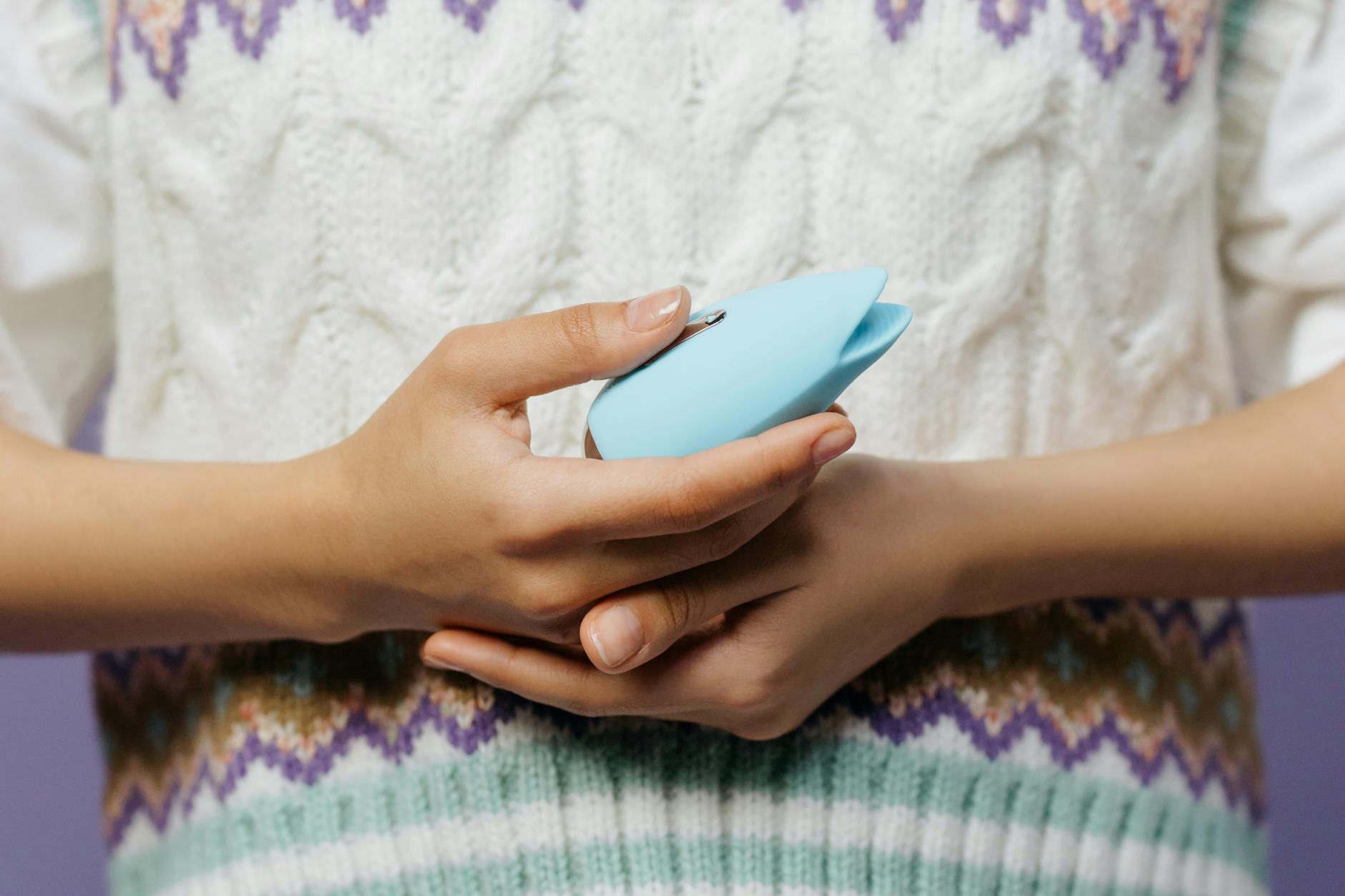
Photo by FounderTips on Pexels
The guilt response is your nervous system protecting you
This is worth saying clearly: guilt isn't a character flaw. It's your nervous system's best attempt to keep you safe based on what it learned. Shame was a survival mechanism once. It kept you compliant in environments where that compliance mattered. Your job now isn't to shame yourself for feeling shame. Your job is to gently prove to your nervous system that pleasure is actually safe.
That proof comes through repetition and consistency. Every time you use the lemon vibrator and nothing bad happens, you're sending a tiny signal to your nervous system that the old rule (pleasure equals wrongness) needs updating. After ten sessions? Nothing changes. After fifty? Your nervous system starts to shift.
This is why patience isn't optional. You're not just learning to enjoy sensation. You're retraining your threat detection system. That takes time.
What to expect during recovery
You might feel: restless, bored, irritated, disconnected. You might not feel much of anything at first. That's normal. Numbness is often what guilt feels like from the inside. You're not broken; you're thawed.
You might also experience a backlash of shame after sessions, especially early on. Your nervous system is confused because the narrative (pleasure is wrong) is meeting the evidence (you just spent 15 minutes with a lemon clitoral vibrator and nothing bad happened). That confusion creates discomfort. Expect it, let it move through, and keep going.
Some sessions will feel good. Some will feel awkward. Some will feel like you're just sitting there wondering why you're doing this. All of that is progress. You're building new neural architecture one session at a time.
When to bring a partner into the conversation
If you have a partner, you don't have to tell them you're using a lemon vibrator as part of healing from guilt. But you do need to create a container where guilt doesn't flourish in the relationship itself. This often means being honest about the source of the guilt, even if the healing is solo.
Partners can inadvertently reinforce sexual guilt by acting like self-pleasure is threatening or by making assumptions about what it means. A brief conversation like "I'm working through some stuff around pleasure that I learned growing up. It might take a while. I'm doing this for both of us" can prevent your partner from interpreting your healing as rejection.
And if you're recovering from someone specifically telling you that self-pleasure was wrong or selfish? That's a different conversation entirely, and it might involve a therapist. Healing from relational shame requires both individual work and relationship repair.
FAQ
Can I use a lemon vibrator if I'm still married to the person who made me feel guilty?
Yes, but the real work is deciding that your pleasure matters more than their disapproval. If your partner actively told you that self-pleasure is wrong, that's controlling behavior, and healing will require addressing that dynamic separately. A lemon clitoral vibrator is a tool for pleasure, not a replacement for honest conversation about why your partner feels threatened by your autonomy.
How long does it take to stop feeling guilty?
There's no timeline. Some people shift in a few months. Others take a year or more. The key is noticing that the guilt is getting quieter, not waiting for it to disappear entirely. After 50 sessions with a Lem, you might still feel a flutter of guilt, but it won't be the dominant signal anymore.
What if I use the lemon vibrator and just feel numb?
Numbness isn't failure. Numbness is what disconnection from pleasure looks like. A lemon vibrator isn't magic; it can't force feeling. But used consistently, it creates the conditions for feeling to return. Stick with level 1 for longer than feels necessary. Let your nervous system know it's safe to come back online.
Is it wrong to use a lemon vibrator to avoid dealing with the guilt directly?
It depends. If you're using it to numb guilt instead of understanding it, that's avoidance. If you're using it to build evidence that pleasure is safe while you're also doing the internal work of examining where the guilt came from, that's integration. Both can happen at the same time.
Should I orgasm during these sessions?
Not as a goal. If an orgasm happens, great. If it doesn't, also fine. The point is presence and permission, not achievement. Turning this into a performance metric (even a positive one) just recreates the original problem. You're learning to let pleasure exist without grading it.
What if I still feel guilty after consistent use of a lemon clitoral vibrator?
It might be time to work with a therapist who specializes in sexual shame or trauma. A lemon vibrator can support healing, but it's not a substitute for professional help if the guilt has deeper roots in trauma or ongoing relational patterns. Sometimes the best tool isn't mechanical. Sometimes it's the right person helping you understand why you learned to hate your own desire.
You deserve pleasure without apology
Sexual guilt is so normalized that people often don't realize it's optional. You weren't born believing that your pleasure was wrong. You learned it. And what's learned can be unlearned, slowly and intentionally, using simple tools like a lemon vibrator and a commitment to showing up for yourself.
Start small. Stay consistent. Let your nervous system be surprised by the fact that nothing bad happens when you claim pleasure as something you deserve. That's how recovery actually works. Not through force or shame-spiraling. Through repetition and permission.
Your body is waiting for you to come home to it. A lemon clitoral vibrator just makes the journey a little easier.
Ready to start rebuilding? Get in touch if you want to discuss which lemon sexual toy might work best for your specific situation.