Pregnancy doesn't kill desire. It reorders it. Some people feel more aroused than ever. Others feel touched out, uncomfortable, or somewhere in between. Neither is wrong, and both can shift week to week.
What actually happens is this: your hormones spike wildly, your body becomes unfamiliar to you, physical discomfort increases, and suddenly you're supposed to also be having sex. The logistics alone are enough to kill the mood before anything else does.
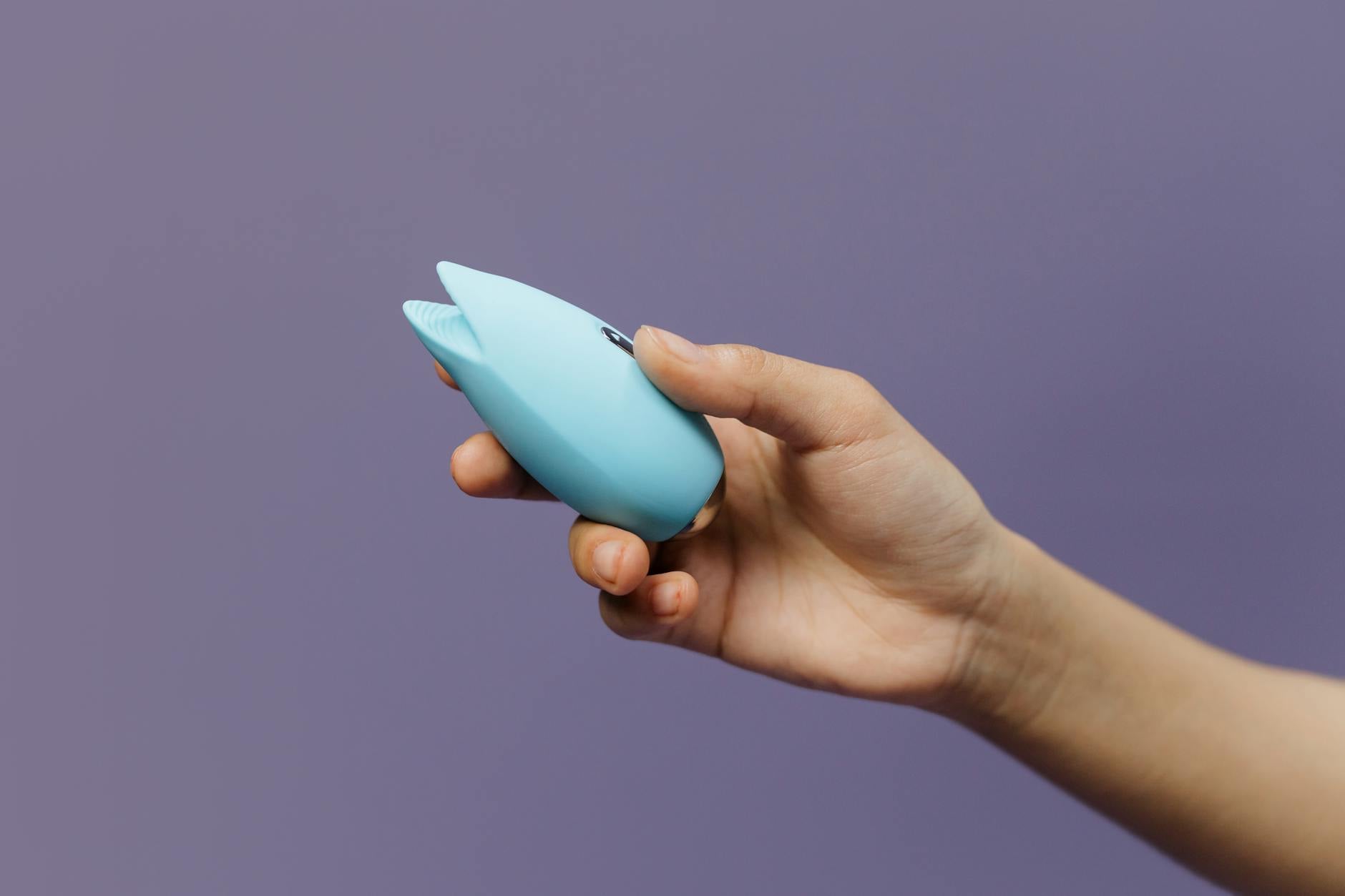
That's where a tool like a lemon clitoral vibrator changes the conversation between you and your partner. Not because it fixes pregnancy, but because it acknowledges what's actually happening and works with it instead of against it.
Three big shifts happen physiologically, and they compound each other.
First, blood flow increases everywhere. Your clitoris gets more sensitive and swells noticeably. This sounds great until you realize that sensitive doesn't always mean better. Hypersensitivity can feel overwhelming, almost painful. Your usual rhythm might feel too intense now.
Second, hormones flood your body differently than they do in a normal cycle. Estrogen and progesterone climb steadily instead of fluctuating, which can actually increase lubrication early on. But that same hormonal shift can also numb arousal or make penetrative sex uncomfortable because ligaments soften and pelvic pressure increases.
Third, your body literally feels like it belongs to someone else. You're heavier, your center of gravity shifts, positions that used to work don't anymore, and the last thing you want is someone poking you in the ribs at 2 a.m. because they didn't realize you've moved six inches closer to the edge.
The suction method is gentler on hypersensitive tissue. Unlike traditional vibration, which is direct mechanical stimulation, a lemon vibrator (also called a lemon sucker or clitoral suction vibrator) creates a gentle pressure wave. When your clitoris is swollen and ultra-responsive, suction feels more controlled and less overwhelming than buzzing. You can start on the lowest settings and actually enjoy it instead of bracing yourself.
Position flexibility matters when you're six months along. Penetration becomes awkward, uncomfortable, or off-limits depending on what your provider recommends. A lemon vibrator lets you and your partner stay close without positioning gymnastics. You can use it during foreplay, solo while they're present, or together in ways that don't require your body to contort.
It's a conversation starter that doesn't feel fraught. Asking for a lemon vibrator is different from asking your partner to do something "special." It's neutral, practical, and takes pressure off both of you to somehow intuitively know what feels good when your body is changing by the week.
Start at the beginning of pregnancy, not the end. Second trimester is often ideal. First trimester, you might be too nauseated or exhausted. By third trimester, you're uncomfortable enough that introducing something new feels like friction instead of fun. Second trimester is when your energy returns, your bump is visible but not immobilizing, and you're curious about adaptation.
Use it as part of foreplay, not the main event. Have your partner hold the lemon vibrator while you're touching each other. Let them explore what speeds and patterns feel good on you. This removes the performance pressure (you don't have to orchestrate your own orgasm) and keeps them engaged. It also gives them information about what your body needs right now, which shifts their role from bystander to active participant.
Start on the lowest settings. I mean it. Settings 1 or 2. Your sensitivity is at a new baseline. What felt perfect before pregnancy might feel jarring now. You can always turn it up. You can't un-ring the bell if you start too high and it kills the mood.
Try it during different parts of your cycle. Yes, you still have hormonal rhythms during pregnancy. Sensitivity still fluctuates. A lemon clitoral vibrator that felt incredible on Tuesday might feel slightly off on Friday. This is normal. It also means you get more data about what your body actually needs week to week.
Incorporate it into positions that work. Side-lying works beautifully during pregnancy. You're both comfortable, your partner has easy access, and there's no pressure on your belly. Your partner can hold the lemon vibrator while you're intertwined. Sitting on their lap works too, with them behind you and you in control of the angle.
Here's what I see couples miss: they assume they should know what each other wants, and pregnancy becomes evidence of how little they actually know.
That's backwards. Pregnancy is permission to ask directly. "I'm more sensitive now and regular vibration is too much. Can we try the suction method?" That's not a request. That's information. It's also sexy because it means you're paying attention to your body instead of performing an idea of pregnancy sex.
Talk about what sensation you're chasing. Are you looking for relaxation? Intensity? Connection? Quick release before bed, or deep exploration on a weekend? These are different questions and they have different answers.
Talk about pressure too. Emotional pressure, not just physical. If you're worried about being attractive or desirable right now, say that. Your partner probably can't fix it by being reassuring, but they can fix it by showing up with curiosity instead of obligation.
A few signs that you should stop and check with your provider:
If you have a history of miscarriage or preterm labor, orgasms can trigger contractions. Your provider might recommend avoiding them, or they might be fine. Ask. Don't assume.
If you have placental issues, pain during sex, or bleeding after sex, orgasms are off the table. A lemon vibrator won't change that. The point of bringing a lemon vibrator into pregnancy isn't to push through discomfort. It's to work with what feels good.
If you have pelvic pain or pelvic girdle dysfunction, direct clitoral stimulation might make it worse. A less intense approach might help, or you might need to wait. Again, your provider is the call here, not the internet.
Most couples don't stop having sex during pregnancy because the mechanics are hard. They stop because the emotional weight gets too heavy.
There's resentment on both sides. One partner feels rejected. The other feels pressured. Pregnancy becomes this thing you have to navigate around each other instead of together. A lemon vibrator doesn't fix that, but it can be the beginning of fixing it.
When you bring pleasure back into the conversation, even in a small way, you're saying "I still want connection. My body is changing, but I still want you." And your partner gets to say "I see that this is hard. I'm here for this version of you, not the version you were before."
That's the actual intimacy. The lemon vibrator is just the vehicle.
Yes, if your pregnancy is low-risk and your provider gives you the green light. Orgasms during pregnancy are safe for most people. If you have a high-risk pregnancy, a history of preterm labor, or placental issues, check with your provider first. The vibration itself doesn't harm the baby. The baby is cushioned and protected. What matters is whether orgasms are appropriate for your specific situation.
No. This is a common myth. Orgasms don't trigger labor, even at term. If your body is ready to go into labor, a lot of things might nudge it along. But lemon vibrators don't do that. If you're overdue and looking for ways to encourage labor, there are evidence-based options your provider can discuss. A clitoral vibrator is not one of them.
This is real. Some partners feel like they're failing if a tool is needed. Others feel like pregnancy is a no-touch zone. Talk about it directly. "I want to stay connected. This isn't about you not being enough. It's about my body changing and wanting a way that works for both of us." Sometimes that lands. Sometimes it doesn't, and you need to talk about what's actually underneath the resistance.
Hypersensitivity during pregnancy is normal. Your clitoris is more engorged with blood, hormones are surging, and nerve endings are more reactive. This usually normalizes after pregnancy. If the sensitivity is painful rather than just intense, or if it comes with other symptoms like discharge changes or pain, that's worth mentioning to your provider. But sensitivity alone is just pregnancy being pregnancy.
A lemon clitoral vibrator becomes your main event instead of a supporting player. You and your partner can focus entirely on clitoral stimulation. You can use it together, with your partner holding it while you give feedback. You can use it solo while they're present and engaged. You can incorporate it into other forms of touch. The point is that it doesn't require penetration. It stands alone.
This depends on your recovery and your provider's guidance. Most people can resume masturbation around 2 weeks postpartum if there's no tearing. Partnered sex usually clears around 4-6 weeks, sometimes longer if there's significant trauma or recovery needed. A lemon vibrator during that recovery period can be helpful because it's gentler than penetration and less likely to cause pain. Start slowly. If it hurts, stop.
Pregnancy is one of the biggest changes your body and your relationship will go through. Pleasure doesn't disappear during it, but it does get weird and complicated. A lemon vibrator won't fix pregnancy. But it can be a tool that keeps you and your partner connected while your body does something extraordinary.
The most important thing is this: you don't have to choose between pregnancy and pleasure. You get both. It just might look different than you expected. And that's not a loss. It's information. Use it.